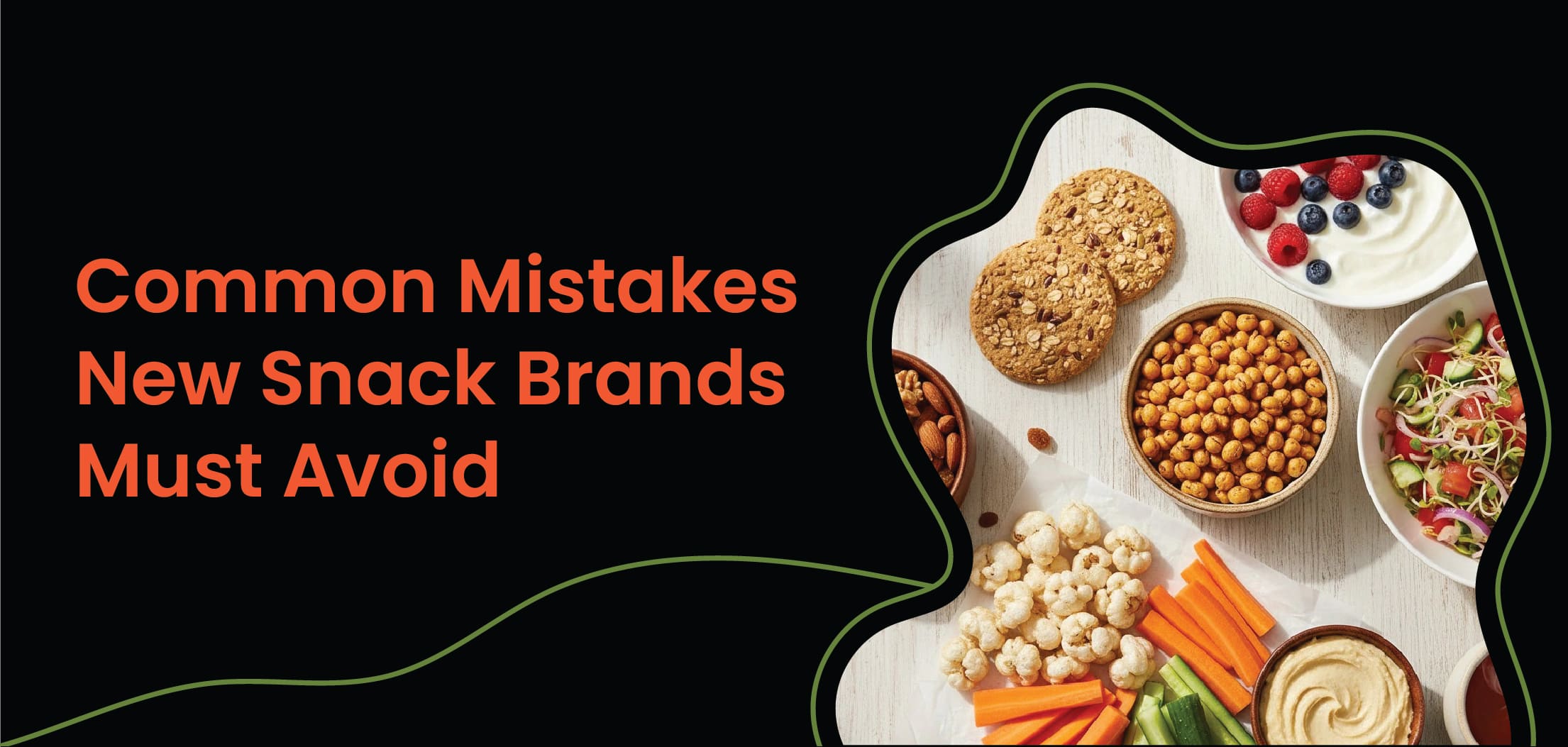
Common Mistakes New Snack Brands Must Avoid
The Indian snack market is booming. With growing demand for healthy, clean-label, and innovative snacks, many entrepreneurs are launching new brands every year. While the opportunity is exciting, the reality is that many snack startups struggle — not because their idea lacks potential, but because of common early-stage mistakes that could have been avoided.
At Madon Pure Foods , we work closely with emerging and established snack brands through private-label and contract manufacturing. Over the years, we’ve seen firsthand where new brands go wrong. Here are the most common mistakes new snack brands must avoid — and how to build a stronger foundation from day one.
1. Choosing Trends Over Product Fundamentals
Many new brands rush to follow trends like protein snacks, millet foods, or sugar-free products without fully understanding formulation, taste, or shelf life. A trend may attract initial attention, but if the product doesn’t deliver on quality, customers won’t return.
What works: Build products on strong fundamentals — great taste, clean ingredients, and consistent quality — and then align them with trends.
2. Compromising Ingredient Quality to Reduce Costs
Cost pressure is real for new brands, but cutting corners on raw materials often leads to inconsistent taste, poor texture, and reduced shelf life. Customers today are highly aware and can quickly spot inferior ingredients.
What works: Use food-grade, traceable ingredients from reliable suppliers. Quality builds trust, and trust builds repeat sales.
3. Ignoring Food Safety & Regulatory Compliance
One of the biggest mistakes startups make is underestimating food safety and regulatory requirements. Missing declarations, incorrect labels, or non-compliant processes can result in product recalls or blocked retail listings.
What works: Ensure manufacturing is done in certified facilities that follow HACCP, FSSAI, and hygiene standards. Compliance should never be an afterthought.
4. Poor Packaging Decisions
Packaging is not just about visual appeal. Inadequate packaging can affect freshness, shelf life, and even brand perception. Issues like moisture absorption, poor sealing, or incorrect pack sizes can quickly damage a product’s reputation.
What works: Choose packaging that protects the product, maintains quality, and suits consumer usage — whether it’s single-serve, family packs, or on-the-go formats.
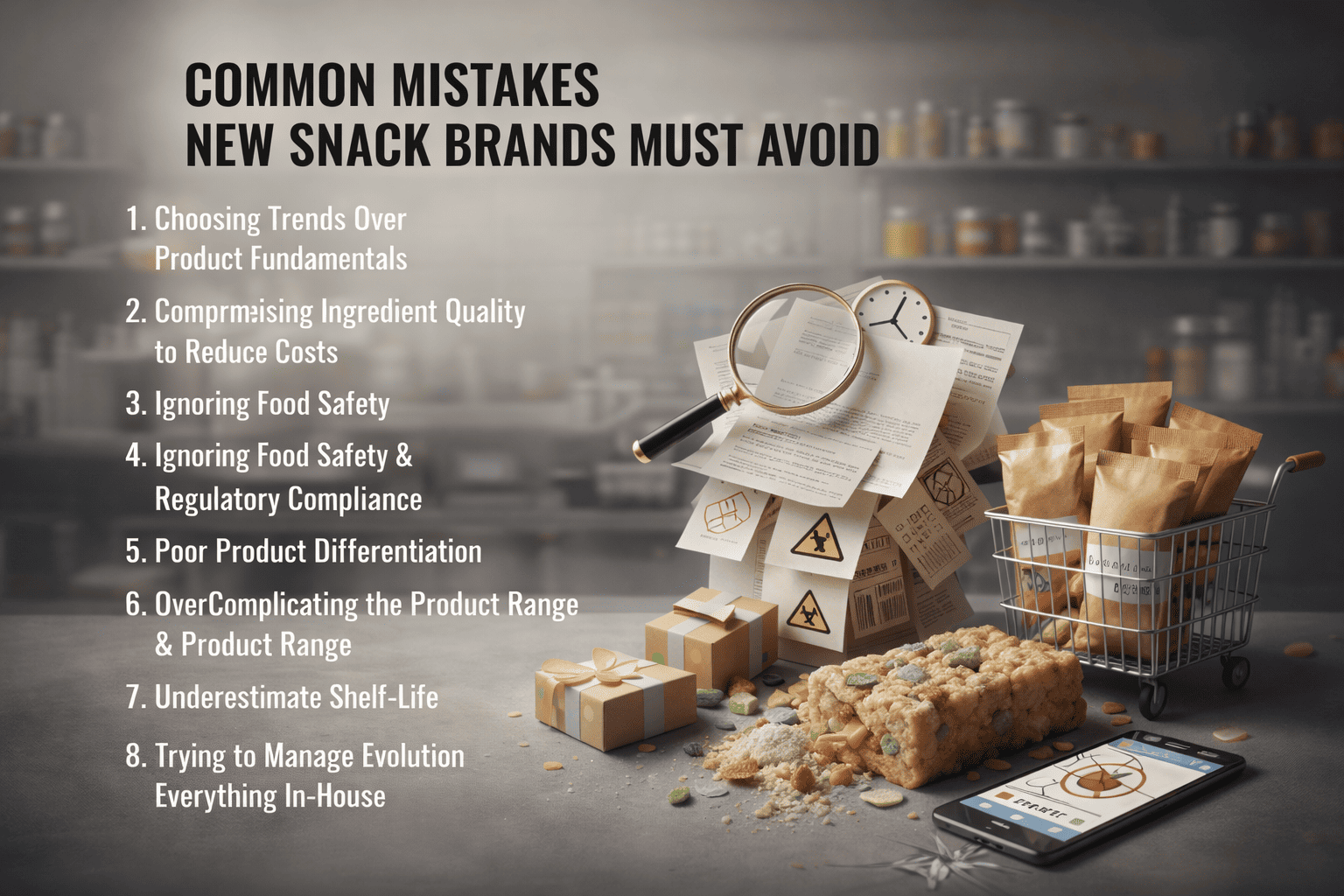
5. Weak Product Differentiation
Many snack brands launch products that look and sound similar to what’s already on the shelf. Without a clear identity, customers have no reason to choose one brand over another.
What works: Define a clear value proposition — whether it’s ingredient transparency, functional benefits, clean-label positioning, or unique flavor profiles.
6. Overcomplicating the Product Range
Launching too many SKUs at once is a common mistake. It increases production complexity, inventory costs, and marketing confusion — especially for new brands.
What works: Start with a focused range of one to three well-developed products. Scale gradually based on demand and feedback.
7. Underestimating Shelf Life & Storage Conditions
New brands often skip proper shelf-life testing, leading to spoilage, texture changes, or rancidity — especially in nut- and seed-based snacks.
What works: Test shelf life under real storage conditions and design formulations and packaging accordingly.
8. Trying to Manage Everything In-House
From sourcing to manufacturing to packaging, many startups try to handle everything themselves. This often results in inefficiencies and quality risks.
What works: Partner with experienced manufacturers like Madon Pure Foods that offer end-to-end support, scalability, and technical expertise.
FAQs: Common Questions New Snack Brands Ask
Yes. It reduces capital investment, ensures compliance, and allows brands to focus on marketing and growth.
Extremely important. Consumers actively avoid artificial additives and prefer transparency and natural ingredients.
One to three core SKUs are ideal for testing the market and managing operations effectively.
Lack of consistency — in taste, quality, and supply — along with unclear brand positioning.
Yes. Packaging impacts shelf life, freshness, convenience, and buying decisions.
Final Thoughts
Launching a snack brand is as much about smart execution as it is about creativity. By avoiding these common mistakes and focusing on quality, compliance, and clarity, new brands can build a strong and sustainable presence in the market.
At Madon Pure Foods , we help snack brands move from idea to shelf with confidence — combining quality manufacturing, clean ingredients, and scalable solutions.
Recent blogs